
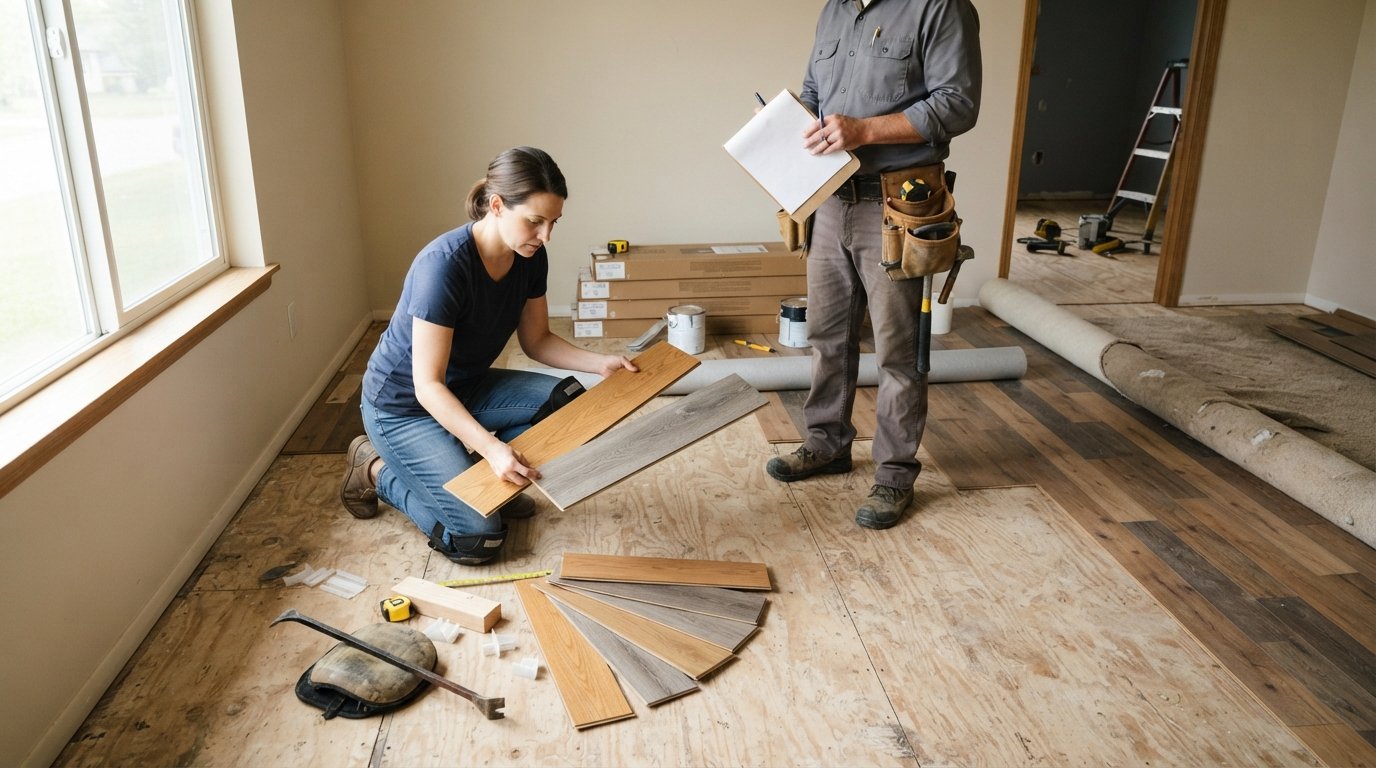
Cost-Effective Flooring Options for Durability and Style
Compare cost-effective flooring options for durability and style, from waterproof vinyl to tile and hardwood, and learn how to keep installation costs low.

By Sarah Thomas
Learn more about Floor Installation or Replacement for guides, costs, and what to expect.
Compare Floor Installation or Replacement Pros Near You

Enter your ZIP code to compare top-rated local professionals and request free quotes.
New floors can transform a room, but the price tag often stops homeowners before the first sample is even ordered. The good news is that you do not have to choose between a floor that looks expensive and one that survives real life. Modern manufacturing has pushed affordable materials into territory that once belonged only to hardwood and natural stone, and smart installation choices can shave hundreds or even thousands off the final bill. Whether you are updating a single bedroom, finishing a basement, or replacing worn carpet across an entire first floor, there is a cost-effective flooring option that matches your budget, your style, and the way your household actually lives.
This guide breaks down the materials that deliver the best combination of price, durability, and appearance, explains where each one performs best, and shows you how to keep installation costs under control. Along the way, you will see how comparing local contractor quotes, and understanding the true lifetime cost of a floor, matters as much as the sticker price per square foot. If you are also planning structural work, our foundation repair cost guide explains how to budget for the repairs that should always come before new flooring.
Why the Cheapest Floor Is Rarely the Best Deal
The price printed on a flooring sample is only one part of what you will pay. Installation, underlayment, adhesives, trim, furniture moving, and the cost of replacing the floor again in a few years all factor into the real number. A vinyl plank that costs a dollar per square foot but buckles in a humid bathroom is not a bargain, it is a repeat expense. A mid-range laminate that handles a busy hallway for fifteen years is a far better investment, even if it costs more up front.
Durability also depends on where the floor goes. A material that thrives in a dry bedroom may fail in a laundry room or a basement slab. Style matters too, but style is easier to change than structure. Paint, rugs, and furniture can shift a room's look for a fraction of the cost of new flooring, so the smartest approach is to pick a floor that fits the room's function first and then choose a color and finish that matches your design taste.
Homeowners who focus on three factors tend to make the best decisions:
- Lifetime cost: the purchase price plus installation plus expected years of service.
- Moisture exposure: how much water, humidity, or spill risk the room sees.
- Traffic level: how many feet, paws, and dropped objects the surface must survive.
Once you rank your rooms by those three factors, the right material often becomes obvious. The sections below cover the leading cost-effective flooring options for durability and style, with honest notes on where each one shines and where it struggles.
Luxury Vinyl Plank and Tile: The All-Rounder
Luxury vinyl plank, often called LVP, has become the default choice for budget-conscious homeowners who still want a high-end look. It is waterproof, comfortable underfoot, and available in realistic wood and stone patterns. Prices typically range from about $2 to $5 per square foot for the material, and many planks click together without glue, which keeps installation labor low. A competent DIYer can install a modest room over a weekend, though hiring a pro usually delivers tighter seams and a better warranty.
Luxury vinyl tile, or LVT, offers the same benefits in square and rectangular formats that mimic ceramic or stone. Both products handle bathrooms, kitchens, basements, and laundry rooms with ease. The wear layer is the key specification to check: a layer of 12 mil or higher suits busy households, while 20 mil products are built for commercial-grade abuse. Thicker wear layers cost more, but they resist scratches and scuffs far longer, which lowers the lifetime cost.
LVP does have limits. It can fade in intense direct sunlight, and heavy furniture on a hot day can leave dents in thinner products. It also cannot be sanded or refinished, so once the wear layer is gone, the floor is done. Still, for most rooms in most homes, it delivers an unbeatable balance of price, water resistance, and visual appeal. If you want the look of wood without the maintenance, this is usually the first material to price out.
Laminate: Style on a Tight Budget
Laminate flooring is a layered composite with a photographic image of wood or stone sealed under a clear wear layer. It costs roughly $1 to $4 per square foot and installs quickly with a click-lock system. Modern laminate looks remarkably convincing, with textured surfaces and beveled edges that mimic real planks. It stands up well to scratches and fading, which makes it a strong choice for hallways, living rooms, and rental properties.
The main weakness is moisture. Standard laminate swells if water sits on it, so it does not belong in full bathrooms, basements prone to dampness, or laundry rooms without careful protection. Some manufacturers now offer water-resistant cores that tolerate spills for a limited time, but they still are not waterproof. If you choose laminate, use it in dry rooms and wipe up spills promptly.
Laminate is also difficult to repair. A damaged plank usually requires disassembling the floor to the damaged row, which is labor-intensive. That said, the low purchase price and fast installation often outweigh the drawbacks for bedrooms, home offices, and dining rooms. When you compare quotes, ask the installer whether the product includes an attached underlayment, since that detail changes both the material cost and the installation time.
Sheet Vinyl and Vinyl Tile: The Budget Champion
If the goal is the lowest possible cost per square foot without giving up too much style, sheet vinyl and standard vinyl tile remain hard to beat. Sheet vinyl can cost under $2 per square foot installed in some markets, and vinyl composition tile, or VCT, is similarly affordable. Both are water-resistant, easy to clean, and comfortable to stand on for long periods, which makes them popular in kitchens, bathrooms, and utility rooms.
The trade-off is appearance and longevity. Sheet vinyl shows seams and can tear if furniture is dragged across it. VCT requires regular waxing to stay attractive and can look institutional in a home setting. Peel-and-stick vinyl tiles are the cheapest option of all, but they shift, curl, and wear quickly on uneven subfloors. They can work as a short-term fix, yet they rarely last more than a few years in a busy home.
For homeowners who need a functional floor fast and plan to remodel again later, these products serve a purpose. For a long-term solution, stepping up to luxury vinyl usually pays for itself in appearance and durability. It helps to get exact installed prices for your rooms rather than guessing, because labor rates vary widely by region and by the condition of the existing subfloor.
Tile: Durable but Installation-Heavy
Ceramic and porcelain tile are among the most durable flooring materials available. They resist water, stains, scratches, and heat, and they can last fifty years or more with minimal care. Porcelain is denser and more water-resistant than ceramic, which makes it the better choice for bathrooms, mudrooms, and entryways. Material prices range from about $1 per square foot for basic ceramic to $10 or more for large-format porcelain.
The catch is installation. Tile requires a stable, level subfloor, a cement backer board or uncoupling membrane, thinset, grout, and precise cutting. Labor commonly accounts for half or more of the total cost, and complex patterns, small mosaics, or heated floor systems push the price higher. A simple grid of large tiles in a single room is far more affordable than a herringbone pattern with decorative borders.
Tile is also hard and cold underfoot, which some homeowners dislike in bedrooms and living areas. Area rugs solve that problem at low cost. Grout lines need sealing in wet areas and occasional deep cleaning, but the floor itself is nearly indestructible. If you plan to stay in your home for decades, tile in the right rooms can be one of the most cost-effective choices over its full life.
Engineered Hardwood and Solid Hardwood: When Real Wood Makes Sense
Hardwood remains the gold standard for resale value and timeless style, but it is rarely the cheapest option. Solid hardwood typically costs $5 to $12 per square foot installed, and it demands stable indoor humidity to prevent gaps and cupping. Engineered hardwood, which uses a plywood core under a real wood veneer, costs somewhat less, handles moisture better, and can be installed over concrete slabs in some cases.
The durability story for hardwood is unique because it can be refinished. Solid wood can be sanded and refinished multiple times over its life, which means a scratched floor can look new again for a fraction of replacement cost. Engineered wood can usually be refinished once or twice, depending on veneer thickness. That refinishability is what makes hardwood a cost-effective flooring option for durability and style over a thirty-year horizon, even though the initial price is high.
Where hardwood fails is in wet rooms and basements. Water damage is expensive to repair, and standing water can ruin a solid wood floor permanently. Homeowners who want the wood look in those spaces should choose luxury vinyl or tile instead. For living rooms, dining rooms, hallways, and bedrooms in a home with controlled humidity, hardwood is a sound long-term investment.
Comparing the Leading Options at a Glance
Every material involves trade-offs between price, water resistance, comfort, and lifespan. The table below summarizes typical installed costs and performance so you can narrow your list before requesting quotes. Prices vary by region, subfloor condition, and product grade, so treat these as planning ranges rather than fixed bids.
- Luxury vinyl plank or tile: about $3 to $7 per square foot installed, waterproof, 15 to 25 years, best all-around value.
- Laminate: about $2 to $5 per square foot installed, moisture-sensitive, 10 to 20 years, best for dry rooms on a budget.
- Sheet vinyl and VCT: about $1 to $4 per square foot installed, water-resistant, 5 to 15 years, best for utility spaces.
- Ceramic and porcelain tile: about $4 to $12 per square foot installed, waterproof, 30 to 50 years, best for wet rooms and high traffic.
- Engineered hardwood: about $5 to $10 per square foot installed, moderate moisture tolerance, 20 to 30 years, best for wood lovers on a mid-range budget.
- Solid hardwood: about $6 to $12 per square foot installed, low moisture tolerance, 30 to 50 years with refinishing, best for resale value in dry living areas.
Notice that the cheapest materials are not always the least expensive over time. A $2 laminate that lasts eight years costs more per year than a $5 vinyl plank that lasts twenty. When you compare quotes, ask each contractor to include the expected lifespan of the product they recommend, along with the warranty terms. That single question often separates a sales pitch from honest advice.
How to Cut Installation Costs Without Cutting Corners
Material is only half the budget. Labor, subfloor preparation, and removal of the old floor can easily match or exceed the product cost. The following steps help homeowners reduce those expenses while protecting the quality of the finished job.
- Remove the old flooring yourself if you are able. Tearing out carpet and tack strips is labor-intensive but not technically difficult. Contractors often charge by the hour for demolition, so doing it yourself can save several hundred dollars.
- Choose click-lock products over glue-down or nail-down. Floating floors install faster, which lowers labor charges. They also allow the floor to expand and contract, reducing callbacks.
- Keep the layout simple. Straight patterns with minimal cuts cost less than herringbone, chevron, or diagonal layouts. Large-format tiles install faster than small mosaics.
- Order extra material in one purchase. Buying ten percent overage in a single order avoids dye-lot mismatches and costly small reorders later.
- Bundle projects and compare at least three quotes. Contractors sometimes discount when multiple rooms are done at once, and competing bids keep pricing honest.
Before any of that, confirm the subfloor is sound. A soft or uneven subfloor will ruin even the best flooring, and fixing it after installation is far more expensive than fixing it first. If your home shows signs of settlement or movement, address those structural issues before laying a single plank. You can find vetted local pros and compare free estimates through services like BuySellRemodel, which helps homeowners plan affordable projects and connect with experienced contractors.
Matching Materials to Rooms for the Best Value
The most cost-effective flooring plan uses different materials in different rooms rather than one product everywhere. A waterproof vinyl in the kitchen and bathrooms, a comfortable carpet or laminate in the bedrooms, and a durable tile or hardwood in the main living areas often delivers better performance per dollar than a single uniform floor.
Consider how each space is used. Entryways and mudrooms take the brunt of outdoor dirt and moisture, so tile or luxury vinyl belongs there. Bedrooms see bare feet and light traffic, so carpet or laminate can save money without sacrificing comfort. Basements need moisture-tolerant products, which usually means luxury vinyl or tile over a properly prepared slab. Living and dining rooms benefit from materials that resist scratches and look good for decades, which points toward hardwood, engineered wood, or high-quality vinyl plank.
Style should tie the rooms together even when materials differ. Repeating a similar wood tone or stone color across transitions makes the home feel cohesive. Transition strips and matching trim hide the seams and protect the edges, and they cost very little compared to the overall project. A flooring contractor can recommend transitions that work with your chosen products and your subfloor heights.
Getting Accurate Quotes and Avoiding Surprise Costs
Flooring estimates vary widely for the same room because contractors include different items. One bid may cover only labor, while another includes removal, disposal, underlayment, and trim. To compare fairly, ask every contractor to itemize the following:
- Material cost per square foot, including the wear layer or grade.
- Labor cost per square foot and estimated installation time.
- Subfloor preparation, leveling, and repair allowances.
- Old flooring removal and disposal fees.
- Trim, transitions, and any furniture moving charges.
- Warranty terms for both the product and the workmanship.
Written, itemized quotes make it easy to spot the low bid that leaves out disposal or leveling. They also give you leverage to negotiate specific line items rather than the total price. A contractor who refuses to itemize is a risk, no matter how attractive the number looks.
Timing matters as well. Flooring projects are often cheaper in the off-season for remodeling, and scheduling during a contractor's slow period can earn a better rate. Flexible homeowners who can wait a few weeks often save more than those who demand immediate installation.
Final Thoughts on Budget-Friendly Floors That Last
The best cost-effective flooring options for durability and style are the ones that match the room, the household, and the long-term plan for the home. Luxury vinyl delivers the strongest overall value for most homeowners, tile wins in wet and high-traffic areas, laminate and sheet vinyl serve tight budgets in dry rooms, and hardwood rewards long-term owners with refinishability and resale appeal. By comparing itemized quotes, preparing the subfloor properly, and choosing products with realistic lifespans, you can get a floor that looks great and holds up for years without draining your savings.