
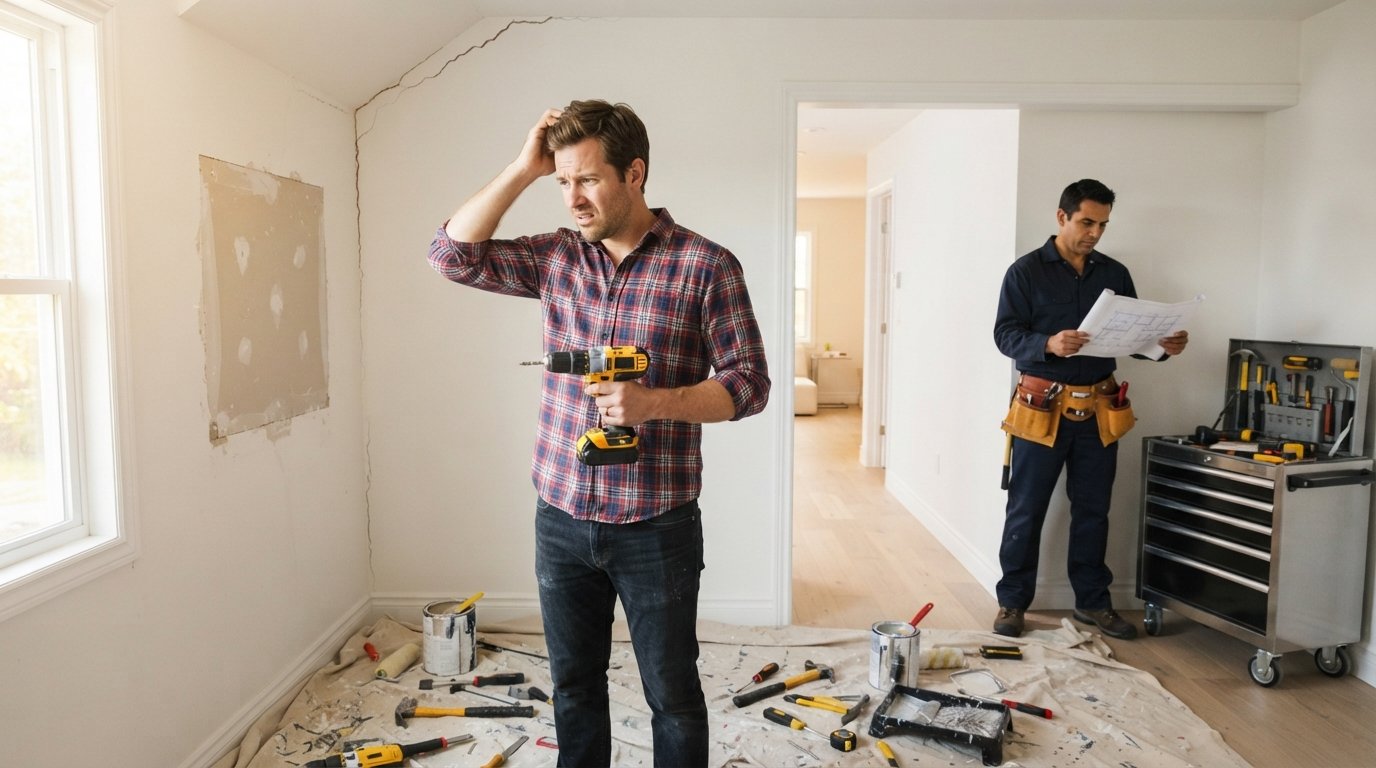
DIY vs Professional: When to Hire a Contractor
Weigh the true cost of DIY versus hiring a pro, and learn when to hire a contractor for safety, permits, and lasting value.

By Sarah Thomas
Learn more about General Contracting for guides, costs, and what to expect.
Compare General Contracting Pros Near You

Enter your ZIP code to compare top-rated local professionals and request free quotes.
You have a leaky faucet that will not stop dripping, or maybe you finally cleared out that cramped closet and stared at the bare drywall with big ideas. The temptation to grab a hammer and do it yourself is strong, especially when you consider the money you could save. But that same project can quickly turn into a weekend-long saga, a trip to the emergency room, or a costly mistake that a professional could have avoided in a few hours. The decision between DIY and hiring a contractor is rarely about skill alone; it is about understanding the true cost of your time, the risk involved, and the long-term value of the work. This guide will help you weigh the pros and cons so you can make the right call for your home, your budget, and your sanity.
Every homeowner faces this crossroads at some point. The rise of online tutorials and big-box store workshops makes DIY seem more accessible than ever, yet the complexity of modern home systems and the high stakes of structural mistakes make professional help equally compelling. The key is not to pick a side blindly, but to evaluate each project on its own merits. By breaking down the factors that matter most, you can confidently decide when to tackle a task yourself and when to call in the experts. Let us walk through the decision framework that separates successful DIY projects from costly disasters.
Assess Your True Skill Level and Experience
Before you even look at the project, take a hard, honest look at your own abilities. Are you comfortable with basic tools, or does the sight of a voltage tester make you nervous? Have you completed similar projects successfully in the past, or are you learning from a video for the first time? For example, painting a bedroom is a common DIY win because it requires patience and preparation more than specialized skill. On the other hand, rewiring a circuit or moving a load-bearing wall demands years of training and a deep understanding of building codes.
Your experience directly impacts the quality and safety of the outcome. A novice might hang drywall, but the seams will likely show, and the corners may crack within a year. A professional brings not only skill but also the right tools for the job, many of which are expensive to rent or buy for a one-time use. Consider the physical demands too. Roofing, for instance, is dangerous and physically exhausting, and a fall can lead to serious injury or worse. If you have any doubt about your ability to complete the work safely and correctly, that is a strong signal to hire a professional.
To help you gauge your readiness, ask yourself these questions before you commit to any project:
- Have I completed a project of similar scope and difficulty before?
- Do I own or can I easily rent all the necessary tools and safety equipment?
- Am I comfortable with the local building codes and permit requirements?
- Do I have the physical stamina and time to finish the work without rushing?
- What is my tolerance for mistakes, and can I afford to redo the work if needed?
If you answered no to more than one of these questions, you are likely better off hiring a contractor. Even if you answered yes, be realistic about the project's complexity. A small tile backsplash might be within reach, but a full bathroom remodel involves plumbing, electrical, waterproofing, and ventilation, all of which have hidden pitfalls that only experience can navigate.
Calculate the Real Cost of DIY vs Professional Work
Money is often the deciding factor, but many homeowners miscalculate the true cost of a DIY project. The obvious savings are the labor charges, which can be 20% to 50% of a project's total cost. However, you must also factor in the cost of tools, materials, permits, and, most importantly, your own time. If it takes you three weekends to complete a job that a pro would finish in two days, your hourly rate might be far below minimum wage. Worse, if you make a mistake, you pay twice for materials and potentially for a professional to fix your work.
On the flip side, professional contractors have established relationships with suppliers, so they often pay wholesale prices for materials. They also carry insurance, which protects you from liability if someone is injured on your property. While the upfront bid may look higher, it includes these hidden costs and guarantees. For projects like electrical panel upgrades or structural changes, the cost of failure is enormous, and a permit inspection will likely reveal any code violations, forcing you to pay for corrections anyway.
When comparing costs, use a simple formula. Estimate the DIY cost by adding material costs, tool rentals or purchases, permit fees, and the value of your time (multiply your hourly wage by the estimated hours). Then, get at least three quotes from licensed contractors and compare the totals. Remember that the lowest bid is not always the best value, but a mid-range bid from a reputable pro often offers the best balance of quality and cost. For a deeper look at how to navigate the bidding process, you can check our guide on hiring home remodeling contractors without regret.
Know the Risks: Safety, Permits, and Hidden Damage
Some projects are simply not worth the risk, no matter how skilled you are. Anything involving gas lines, major electrical work, or load-bearing walls should be left to professionals. A mistake in these areas can cause fire, carbon monoxide poisoning, or structural collapse, and your homeowner's insurance may deny coverage if the work was done without proper permits and inspections. Even seemingly simple tasks like replacing a water heater can go wrong, leading to flooding and water damage that costs thousands to repair.
Permits are another critical factor. Many homeowners skip them to save time and money, but unpermitted work can create huge problems when you sell your home. Buyers and their inspectors will flag unpermitted additions or renovations, and you may be forced to tear out the work or pay for retroactive permits and inspections. Contractors know the local codes and will pull the necessary permits as part of their service, which protects you legally and financially.
Hidden damage is another reason to call a pro. When you open up a wall to fix a leak, you might discover mold, termite damage, or outdated wiring. A contractor has seen these issues before and can handle them efficiently, often with the help of specialized subcontractors. A DIYer might panic, pause the project, and then struggle to find the right help mid-renovation, leaving your home in a worse state than before.
When DIY Makes Perfect Sense
Despite the risks, there are many projects where DIY is the smart choice. These are tasks that are low-risk, require minimal specialized tools, and offer a clear path to completion. For example, painting, installing vinyl plank flooring, replacing cabinet hardware, or building a simple garden bed are all great beginner projects. They require patience and attention to detail, but the cost of failure is low, and the learning experience is valuable.
DIY also makes sense when you have the time and genuine interest to learn. If you enjoy working with your hands and have a flexible schedule, you can take on larger projects like tiling a bathroom floor or building a deck, provided you do thorough research and follow safety guidelines. The satisfaction of saying, "I built that myself," is real, and you can save a significant amount of money. Just be sure to set a realistic timeline and budget for mistakes, and never start a project you cannot afford to finish.
When to Hire a Professional Without Hesitation
Certain projects should always trigger a call to a licensed contractor. These include any work that affects the structural integrity of your home, its electrical or plumbing systems, or its exterior envelope. Roofing, siding, windows, and foundation repairs are prime examples. These tasks are dangerous, highly technical, and crucial to your home's protection. A professional will have the right safety gear, insurance, and expertise to complete the work to code.
You should also hire a pro when the project requires multiple trades. A kitchen remodel, for example, involves plumbing, electrical, carpentry, and sometimes HVAC work. Coordinating these trades is a full-time job, and a general contractor manages the schedule, the permits, and the quality control. Trying to coordinate subcontractors yourself can lead to delays, cost overruns, and finger-pointing when something goes wrong. For major renovations, the peace of mind is worth the cost.
Finally, hire a professional if your project requires a permit and your local authority has strict inspection standards. For example, adding a bedroom or a bathroom requires plans that meet building codes, and an inspector will check the work at various stages. A contractor knows how to pass these inspections and will handle the paperwork. If you attempt it yourself and fail the inspection, you will have to pay for the corrections and the re-inspection fee, which can quickly eat into any imagined savings.
Use a Simple Decision Framework for Any Project
To make the right call, use a simple three-step framework. First, classify the project as cosmetic, mechanical, or structural. Cosmetic projects like painting or installing new fixtures are usually DIY-friendly. Mechanical projects like plumbing or electrical work require more skill and often need a permit. Structural projects like moving walls or adding rooms are almost always for professionals. Second, calculate the true cost of DIY versus hiring a pro, including your time and the risk of mistakes. Third, consider the value of your home and your personal safety.
Here is a quick reference to guide your decision:
- Cosmetic and low-risk: Paint, install backsplash, replace hardware. DIY is usually fine.
- Moderate risk: Install flooring, build a deck, replace a faucet. DIY if you have experience, otherwise hire.
- High risk and code-sensitive: Electrical panel, plumbing rough-in, roofing. Always hire a licensed pro.
- Multi-trade and large scope: Kitchen, bathroom, or basement remodel. Always hire a general contractor.
- Structural changes: Load-bearing walls, foundation work. Never DIY.
Remember that this framework is not about ego; it is about protecting your investment. A well-executed DIY project can add value and pride, but a botched job can decrease your home's value and create safety hazards. When in doubt, get a free estimate from a local contractor. Websites like BuySellRemodel can help you compare quotes from vetted professionals, making it easy to see what the professional work would cost and whether it fits your budget.
The Bottom Line: Balance Cost, Risk, and Reward
Deciding between DIY and professional work is not about proving your manhood or saving every penny. It is about making a calculated choice that protects your home, your family, and your finances. Start by honestly assessing your skills and the project's demands. Then, run the numbers, including the value of your time and the cost of potential mistakes. Finally, never compromise on safety or code compliance. If a project requires a permit or involves dangerous systems, hire a professional.
The good news is that you do not have to make this decision alone. Many contractors offer free consultations and estimates, so you can gather information without any commitment. Use those conversations to learn more about the work involved and to get a realistic price. This approach takes the guesswork out of the equation and empowers you to make the smartest choice for your specific situation. Whether you are refreshing a single room or planning a major addition, a little planning goes a long way.
Ultimately, the best DIY projects are the ones that end with a sense of accomplishment and a job well done. The best professional projects are the ones that end with a quality result that adds lasting value to your home. By knowing your limits and respecting the complexity of home systems, you can enjoy the best of both worlds. So next time you face a home improvement challenge, take a breath, run through this framework, and decide with confidence. Your home, your wallet, and your peace of mind will thank you.