
Interior Painting Costs and Tips for a Flawless Finish
Discover real interior painting costs, DIY vs. pro tips, and how to pick the right contractor for a flawless finish.

By Sarah Thomas
Learn more about Interior Painting for guides, costs, and what to expect.
Compare Interior Painting Pros Near You

Enter your ZIP code to compare top-rated local professionals and request free quotes.
Walk into any room, and the paint color sets the mood before you notice anything else. Fresh interior painting transforms a home faster than almost any other upgrade, yet many homeowners delay the project because they worry about cost, mess, and finding the right professional. The truth is, a successful paint job comes down to smart planning, honest budgeting, and choosing a contractor who respects your time and your home. Whether you are refreshing a single bedroom or repainting the entire house, this guide walks you through every stage of the process, from estimating costs to preparing walls to hiring the best painter for the job.
This article covers the real numbers behind interior painting, the factors that move those numbers up or down, and the step-by-step approach that keeps your project on track. You will also learn how to spot quality work, what questions to ask before signing a contract, and how to avoid the most common mistakes that turn a simple paint job into a costly headache. By the end, you will feel ready to either pick up a brush with confidence or request a free quote from a vetted local contractor who can handle the heavy lifting.
How Much Does Interior Painting Cost in 2026?
Interior painting costs vary widely depending on your location, the size of your home, the condition of your walls, and the quality of materials you choose. As a general rule, homeowners pay between $1.50 and $4.00 per square foot for professional interior painting, with the national average hovering around $3.00 per square foot. For a typical 2,000 square foot home, that translates to roughly $3,000 to $6,000 for a full interior repaint, including labor and materials. Smaller projects, such as a single 12x12 bedroom, usually run between $350 and $800, while a full bathroom might cost $200 to $500.
These figures assume standard wall height, average wall condition, and two coats of high-quality paint. If your walls have significant damage, require extensive patching, or feature textured finishes, expect the price to climb. Likewise, homes with vaulted ceilings, intricate trim, or multiple stories will cost more because the painter needs extra time, equipment, and safety measures. The best way to get an accurate number is to request multiple free estimates from local contractors, as they can assess your specific space and provide a detailed breakdown.
Factors That Affect Your Interior Painting Price
Before you budget for your project, it helps to understand what drives the final invoice. Painters base their quotes on several key variables, and knowing these can help you compare bids fairly and avoid surprise charges. Here are the main cost factors to consider:
- Labor: This typically makes up 70 to 80 percent of your total cost. Experienced painters charge $20 to $50 per hour, and they factor in prep time, priming, and clean-up.
- Paint quality: Budget paints cost $20 to $30 per gallon, while premium lines run $50 to $70 per gallon. Higher-end paints offer better coverage, durability, and washability, which can save money in the long run.
- Surface preparation: Walls with cracks, holes, or peeling paint need extra work. Patching, sanding, and priming can add $0.50 to $1.00 per square foot.
- Number of coats: Most painters quote two coats for even coverage. If you are making a dramatic color change or covering a dark color with a light one, you may need a third coat or an extra primer layer.
- Trim and ceiling details: Painting crown molding, baseboards, doors, and ceilings requires more time and precision, adding $1 to $3 per linear foot for trim work.
Other factors that can influence price include the accessibility of your home, the amount of furniture that needs moving, and whether you want eco-friendly or low-VOC paints. A professional painter will walk through your home, note these details, and give you a written estimate that itemizes each cost. Always ask for a breakdown so you know exactly what you are paying for.
DIY vs. Hiring a Professional Painter
Many homeowners consider tackling interior painting themselves to save money, and it is true that a DIY approach can cut your costs roughly in half. For a small room, you might spend $150 to $300 on paint, primer, brushes, rollers, tape, and drop cloths, compared to $500 or more for a pro. However, DIY painting comes with hidden expenses and risks. Mistakes like uneven coverage, drips, and roller marks often require expensive rework or a professional rescue job. The time commitment is also significant: a single room can take several weekends, especially if you are learning as you go.
Professional painters bring speed, precision, and experience. They know how to prepare surfaces correctly, choose the right paint for each surface, and achieve a smooth, factory-like finish. They also handle the tedious work of moving furniture, patching holes, and cleaning up afterward. For most homeowners, the peace of mind and time savings are worth the extra cost. If you are considering a full-house repaint or have walls in poor condition, hiring a pro is almost always the smarter choice. Use our free estimate service to connect with local painters who can give you a fair price and a realistic timeline.
Preparing Your Home for Interior Painting
Proper preparation is the secret to a paint job that lasts. Whether you hire a professional or go the DIY route, the steps are the same. Start by clearing the room as much as possible. Move large furniture to the center and cover it with plastic sheeting, or remove it entirely if you can. Take down curtains, blinds, wall art, and switch plates. This gives the painter full access to the walls and prevents damage to your belongings.
Next, clean the walls thoroughly. Dust, grease, and grime can prevent paint from adhering properly, leading to peeling and bubbling later. Use a mild detergent solution and a sponge to wipe down all surfaces, paying extra attention to areas near light switches, door frames, and baseboards. Rinse with clean water and let the walls dry completely. Then, inspect for damage. Fill nail holes and small cracks with spackling compound, sand smooth once dry, and apply a stain-blocking primer to any water stains or heavy marks. These few hours of prep work will make a noticeable difference in the final result.
Choosing the Right Paint and Finish
Paint is not just about color; the finish you choose affects durability, cleanability, and the overall look of the room. For interior walls, you have five main options: flat, eggshell, satin, semi-gloss, and high-gloss. Flat paint hides imperfections well but is difficult to clean, making it best for low-traffic areas like adult bedrooms and ceilings. Eggshell offers a subtle sheen and is easier to wipe down, which is why it is the most popular choice for living rooms and hallways. Satin is even more durable and moisture-resistant, ideal for kitchens, bathrooms, and kids' rooms. Semi-gloss and high-gloss are highly reflective and tough, perfect for trim, doors, and cabinets, but they magnify surface flaws, so they require a smooth base.
Color selection is just as important as sheen. Lighter colors make a room feel larger and brighter, while darker shades add drama and warmth. However, dark colors can make a small space feel cramped, and they require more coats for even coverage. Consider the room's natural light, your existing furniture, and the mood you want to create. Most paint stores offer sample pots, so test a few colors on your wall and observe them at different times of day before committing. A professional painter can also offer guidance on color trends and finishes that will enhance your home's value.
Step-by-Step Process for a Professional-Looking Finish
Once the prep work is complete, the actual painting process follows a proven sequence. Start by priming the walls with a high-quality primer, especially if you are covering a dark color, repairing patches, or painting new drywall. Primer seals the surface, promotes adhesion, and ensures your topcoat goes on evenly. Let the primer dry completely according to the manufacturer's instructions.
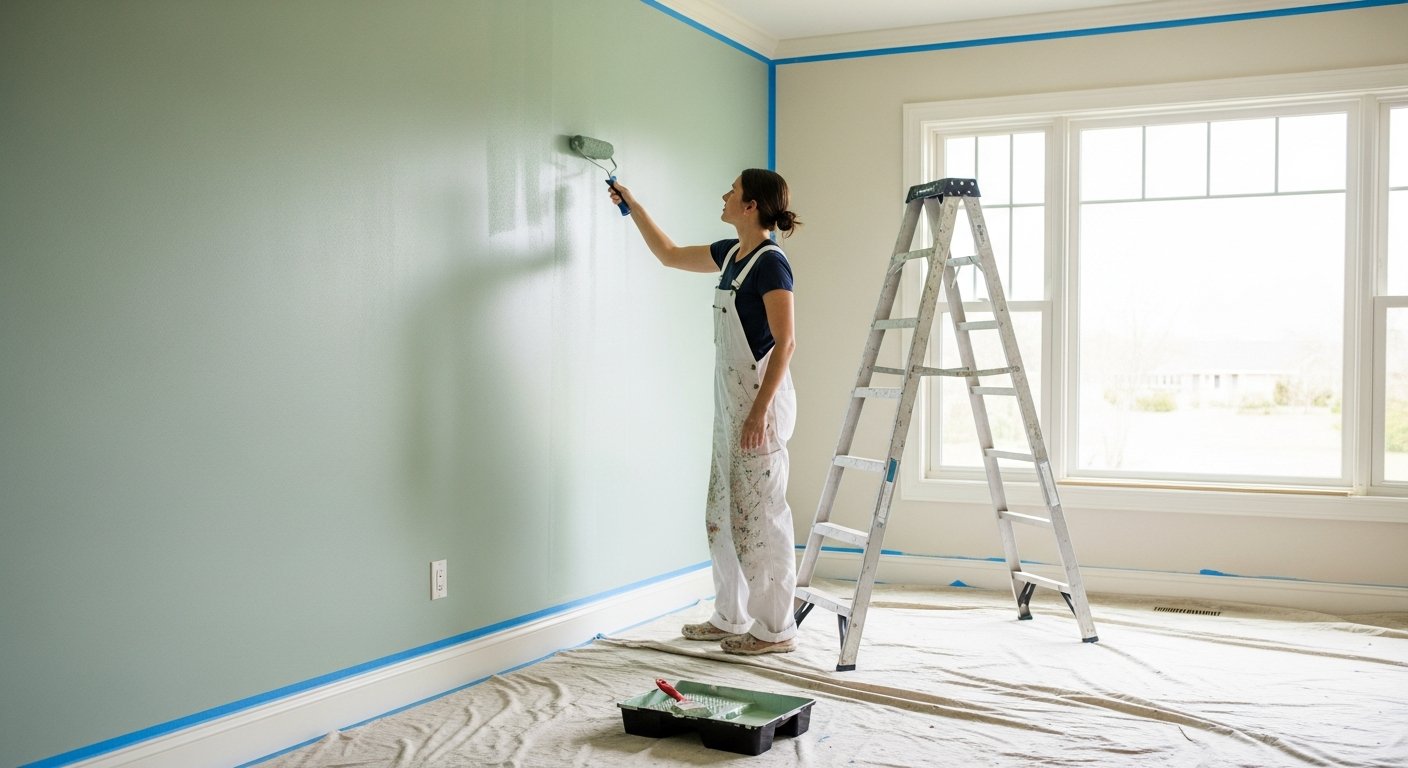
Before cutting in, protect your floors and trim with painter's tape and drop cloths. Use a high-quality angled brush to cut in along ceilings, corners, and trim, creating a clean edge. Then, use a roller to apply paint to the open wall areas, working in sections from top to bottom. Apply the paint in a W or M pattern to distribute it evenly, then roll over the same area to smooth it out. Keep a wet edge to avoid lap marks, and always apply two coats for the best durability and coverage. After the final coat, remove the tape while the paint is still slightly wet to avoid peeling, and let the room dry completely before moving furniture back.
Common Interior Painting Mistakes to Avoid
Even experienced DIYers make mistakes, and some errors can ruin an entire room's appearance. One of the most common is skipping the primer. Primer is not just an extra step; it hides stains, seals porous surfaces, and ensures your paint color looks true. Skipping it can lead to uneven sheen, bleeding stains, and a finish that chips easily. Another frequent mistake is using the wrong roller cover. A smooth wall requires a 3/8 inch nap roller, while textured walls need a thicker 3/4 inch nap. Using the wrong cover leaves a stippled texture or fails to reach into crevices.
Poor technique also causes problems. Loading too much paint onto the roller creates drips and runs, while rolling too fast or with too little pressure leaves streaks and roller marks. Cutting in with a shaky hand results in wavy edges that require touch-ups. Finally, many homeowners underestimate drying times and apply a second coat too soon, which can lift the first coat and create blotches. Always follow the paint manufacturer's drying time recommendations, usually two to four hours between coats, and allow at least 24 hours before cleaning or hanging anything on the walls.
How to Find the Right Interior Painting Contractor
Choosing the right contractor is the most important decision you will make for your interior painting project. A quality painter delivers a flawless finish, stays on schedule, and leaves your home clean. A poor painter can waste your money and create a mess that takes months to fix. Start by asking friends, family, and neighbors for recommendations. Then, use our free estimate service to get quotes from multiple vetted local professionals. This lets you compare pricing, services, and customer reviews without any obligation.
When you meet with potential contractors, ask for proof of insurance, including liability and workers' compensation. A legitimate painter will happily provide this. Ask for references from recent jobs and follow up with those homeowners to ask about their experience. Get a detailed written estimate that includes the exact paint brand and color, the number of coats, the prep work involved, and the expected timeline. Never accept a verbal quote or pay a large deposit upfront. A typical down payment is 10 to 20 percent, with the balance due upon completion and your final walkthrough.
Questions to Ask Before Hiring a Painter
To make sure you are hiring the right person, prepare a list of questions before the estimate. Ask how long the project will take, including prep and drying time. Ask how many people will be working and whether the crew is experienced or if it includes trainees. Ask about the specific paint products they recommend and why. A professional should be able to explain the differences between paint lines and suggest the best option for your home and budget.
Inquire about their process for protecting your floors, furniture, and trim. Ask if they move furniture or if you need to handle that yourself. Ask about their policy for touch-ups after the job is done, as some contractors offer a 30-day or one-year warranty on labor. Finally, ask for the exact contract terms, including the payment schedule, start date, and completion date. A clear, written agreement protects both you and the contractor and sets the expectation for a smooth project.
Interior Painting Trends and Finishes for 2026
If you are planning a repaint, you might wonder which colors and finishes are currently popular. In 2026, the trend leans toward warm, earthy neutrals like terracotta, olive green, and warm beige, along with soft, muted blues and greens that create a calming, spa-like atmosphere. Deep charcoal and forest green are popular for accent walls and cabinetry, adding depth without overwhelming a space. Matte and eggshell finishes remain favorites for walls because they offer a soft, modern look while being more washable than true flat paint.
For trim and doors, many homeowners are moving away from stark white and choosing cream, greige, or even black for a bold, contemporary contrast. Limewash and plaster finishes are also gaining traction for their textured, organic appearance, though they require special application and a higher budget. If you want a timeless look that appeals to future buyers, stick with neutral walls and white or off-white trim. These choices make rooms feel larger and allow furniture and decor to shine.
Maximizing Your Interior Painting Investment
Interior painting is one of the most cost-effective home improvements you can make. According to real estate experts, a fresh coat of paint can increase your home's resale value by 1 to 3 percent, and it is one of the few projects that offers a near-instant return on investment. Even if you are not selling, a new color scheme can completely change how you feel about your space, making it feel cleaner, brighter, and more inviting. To maximize your investment, choose quality materials, prep surfaces properly, and hire a professional who will stand behind their work.
Before you begin, set a realistic budget and stick to it. Get at least three estimates, and do not automatically choose the lowest bid. Instead, evaluate each contractor's experience, references, and the details in their proposal. Ask about any potential extra costs, such as repairing drywall, moving heavy furniture, or painting high ceilings, so there are no surprises on the final invoice. With careful planning, your interior painting project can be a smooth, rewarding experience that adds lasting value to your home.
Ready to transform your home with a fresh coat of paint? Request a free quote from our network of trusted local painting contractors. Compare options, read reviews, and choose the pro who fits your budget and timeline. Your dream space is just a paint job away.